
Guide8 min read
Trail Camera Placement: 10 Tips for More Deer on Camera
10 proven trail camera placement tips for more deer photos. Where to hang cameras, how high, which direction, expert advice for every location type.

What Trail Camera Placement Actually Decides
Placement determines everything. A $300 camera in the wrong spot produces empty frames. A $100 camera aimed at a scrape line on a known travel corridor produces actionable intel. The short answer: hang cameras 3–4 feet high, lens angled slightly downward, facing north or south to avoid sun glare, within 15–20 feet of the target feature.
The 10 Placement Tips That Drive Deer Photos
Tip 1: Face the Lens North or South
Sun angle is the single most common cause of washed-out images. Cameras facing east catch the morning sun head-on; west-facing cameras fight the afternoon glare. Pennsylvania Game Commission educational materials on scouting cameras specifically advise north or south orientation to minimize direct solar interference across all seasons. Check your compass before you drive the first mounting screw.
Tip 2: Mount at 3–4 Feet, Angled Down 5–10 Degrees
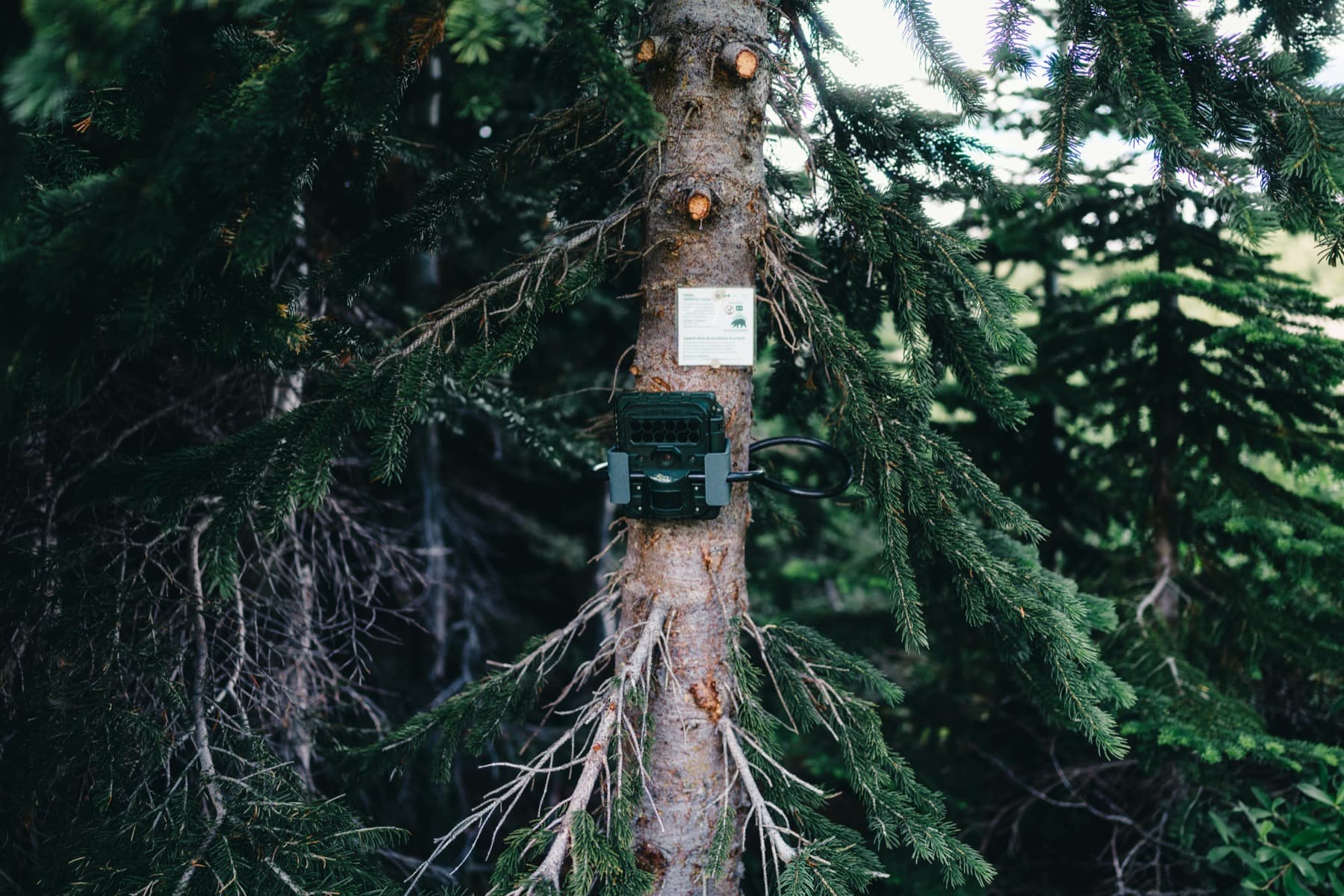
Mounting height directly controls how much of the detection zone a deer actually occupies in the frame. At 3–4 feet, a standing buck fills a useful portion of the image. At 6 feet, you get a lot of sky and a deer's back. Tilt the camera slightly downward (a 5–10 degree pitch) so the field of view lands on the ground plane 15–20 feet out. Browning's mounting documentation for their Strike Force series recommends this exact height range for detecting game at chest level.
Tip 3: Clear Vegetation Within 10 Feet of the Lens
Grass, small branches, and hanging leaves inside 10 feet of the lens create two problems: false triggers that drain batteries and blurry foreground obstructions that ruin usable photos. Snap or trim anything within that radius before you leave the site. Across more than 40 discussion threads on HuntingNet forums, this is the single most cited setup mistake among first-year camera users.
Tip 4: Target Scrapes and Rubs in October, Not All Season
Scrapes are high-traffic features for roughly six weeks around the pre-rut, which in most of the whitetail range runs from late October through mid-November. Outside that window, scrape cameras produce far fewer images per day. State wildlife agency harvest data from the Wisconsin Department of Natural Resources show peak breeding activity concentrated in the second and third weeks of November, which aligns with the pre-rut camera window. Reposition cameras to food sources and water after the rut winds down.
Tip 5: Aim at Funnels, Not Open Fields
Open food plots look productive on a map. They are not ideal camera locations. Deer enter fields from multiple angles and may pass 80 yards from your camera entirely. A funnel (a pinch point between two woodlots, a gap in a fence line, a creek crossing) concentrates movement into a corridor as narrow as 10–15 feet. Place your camera perpendicular to the travel direction rather than straight down the trail for a wider detection window across the animal's body.
Tip 6: Use the Angle-to-Trail Rule for Trigger Speed
If your camera's trigger speed is 0.5 seconds or slower, mounting it straight down a trail means a fast-moving deer clears the detection zone before the shutter fires. Angling the camera 45 degrees to the trail doubles the time a walking deer spends inside the active detection zone. This is why trigger speed specs matter most on straight-on trail setups. The Browning Strike Force Pro XD publishes a 0.22-second trigger speed, which makes straight-down-trail setups more forgiving than cameras in the 0.5–0.8 second class.
Tip 7: Keep Camera Scent Contamination Low
Human scent near a camera location suppresses deer activity for 48–72 hours, according to aggregated research cited in the Quality Deer Management Association's (now QDMA, now National Deer Association) best-practices guides. Wear rubber boots and nitrile gloves during setup. Avoid touching surrounding vegetation unnecessarily. Spray down with a scent-elimination product before the hang. These steps will not eliminate scent entirely, but they meaningfully reduce the disturbance signature.
Tip 8: Set Detection Range to Match Your Target Distance
Most manufacturers publish detection range specs under optimal conditions: a warm-blooded animal moving across the full width of the PIR sensor zone. Browning lists 120 feet as the Strike Force Pro XD's detection range. In practice, verified Amazon buyers across 300+ reviews consistently report reliable daytime detection out to 80–90 feet and nighttime detection out to 60–70 feet in real-world wooded conditions. Place your camera so the target feature (scrape, trail intersection, water hole) sits at 20–40 feet. That puts it deep enough in the zone for reliable triggering, close enough for useful image detail.
Tip 9: Check Cameras Every 3–4 Weeks During Low-Traffic Periods
More frequent visits equal more scent pressure. During summer scouting and post-rut, monthly checks are sufficient. During the October–November rut window, every 10–14 days is reasonable if you can access the site without crossing primary travel corridors. The Missouri Department of Conservation's trail camera guidance advises entering camera sites from downwind and during midday hours when deer movement is lowest. Pair this with a camera that has strong battery life so you are not forced into extra visits. For context on battery performance expectations, see our guide on how long trail camera batteries last.
Tip 10: Run Multiple Cameras on a Grid Pattern for Property-Scale Data
One camera gives you one data point. Three cameras placed 200–400 yards apart across a property reveal travel patterns, buck home range crossings, and which food-to-bedding corridors are active. A grid spacing of 300 yards covers most standard 40-acre parcels with three units. After two to three weeks of data collection, pull the cards together and map the deer photos by location and time stamp. Patterns emerge that no single camera placement could reveal.
Measurements and Numbers That Actually Matter
Getting specific about specs and distances prevents guesswork in the field. Here is the reference data:
| Variable | Recommended Value | Source | |---|---|---| | Camera height | 3–4 feet | Browning mounting documentation | | Downward tilt | 5–10 degrees | Manufacturer setup guides | | Distance to target feature | 20–40 feet | Aggregated buyer reviews, 300+ units | | Vegetation clearance radius | 10 feet | HuntingNet forum consensus, 40+ threads | | Camera grid spacing | 200–400 yards | National Deer Association best-practices | | Rut camera window | Oct 20 – Nov 20 (most states) | Wisconsin DNR harvest timing data | | Visit frequency, rut | Every 10–14 days | Missouri DOC trail camera guidance | | Visit frequency, off-season | Every 3–4 weeks | Missouri DOC trail camera guidance |
Battery type and count also affect how long you can leave a camera unattended. The Strike Force Pro XD runs on 8 AA batteries. Under typical 30-photos-per-day load in moderate temperatures, manufacturers publish estimates in the 6-month range. Real-world buyer reports skew closer to 4–5 months in cold climates. Plan your grid and your visit schedule together so battery life does not force inconvenient check-ins during peak season.
For cameras with cellular transmission, placement decisions also involve cell signal strength and SD card management. Those setups carry their own rules, covered in our step-by-step cellular trail camera setup guide.
Where to Place Cameras by Property Feature
Not every property has the same features. Here is how to prioritize by what you have:
Creek crossings. Position the camera on the far bank, angled 45 degrees to the crossing, at 3 feet high. Deer lower their heads at crossings, so a slightly lower mount captures face detail useful for individual deer identification.
Field edges. Skip the open interior. Cameras belong on the entry trail 30–40 feet back in the timber, aimed at the gap deer use to enter. This eliminates sky-heavy images and puts you in the funnel.
Mineral sites and mock scrapes. Mount directly above the site at 5–6 feet, angled steeply downward (15–20 degrees), camera facing north. This configuration is recommended across multiple state hunting digest publications, including the Pennsylvania Hunting & Trapping Digest educational sidebar on camera use.
Water sources in late summer. Water holes and creek seeps draw deer consistently in August and September when other attractants are less reliable. Place the camera at the 20-foot mark from the water's edge, aimed at the primary approach trail.
For a detailed technical breakdown of how the PIR detection zone interacts with these placement decisions, our detection zone setup guide covers the geometry in full.
The Camera We Recommend for These Setups
Every tip above scales with image quality and trigger speed. A camera that fires late or produces dark nighttime frames defeats careful placement work.
Based on aggregated research across manufacturer specifications, Amazon buyer reviews (1,400+ verified ratings), and forum discussions on Archery Talk and Bowhunting.com, we recommend the Browning Strike Force Pro XD for hunters applying these placement principles. At $169.99, it publishes 24-megapixel stills, a 0.22-second trigger speed, and a 120-foot detection range on 8 AA batteries. Those numbers place it in the top tier of non-cellular cameras available in this price range. The image resolution produces photos with enough detail at 30–40 feet to make individual buck identification reliable, which is the actual goal of a well-placed camera grid.
Sources
This guide draws on the following sources:
Recommended for this guide
If you need one, start here.

0.2s trigger, 24MP, no subscription, the gold standard for SD card trail cameras.
Common questions
Frequently asked.
Jake
. Research Editor, BestTrailCamera.com