

Hunt Guide
Trail cameras for wild turkey hunting.
Wild turkeys are among the most challenging trail camera subjects: unpredictable travel patterns, sensitivity to disturbance, and frequent activity in low-light conditions that punish poor flash technology. No-glow IR is the working baseline.

What this species demands
No-glow IR is the price of entry.
Wild turkeys are quick to abandon a strut zone or roost area where they have detected an unfamiliar light source. The no-glow requirement is nearly universal among serious turkey hunters: gobblers avoid any visible flash or unusual LED glow with a speed deer rarely match.
Turkey-specific camera placement focuses on strut zones, roost trees, and travel corridors between roost and feeding areas. March and April bring the most activity as gobblers work their breeding range, making pre-season scouting invaluable for locating strut zones before opening day.
Unlike deer cameras where trigger speed is paramount, turkey hunting benefits more from wide detection angles and flash quality. Turkeys rarely sprint through a frame. The Browning Dark Ops HD Pro X invisible flash and wide detection zone make it a standout for turkey monitoring.
Starter picks
Three turkey cameras to start with.
No-glow standard for strut zones, cellular for early-season scouting from home, and a budget no-glow for multi-camera setups across a property.

24MP no-glow flash with a 0.2-second trigger, the best invisible-flash camera for serious deer hunters under $150.
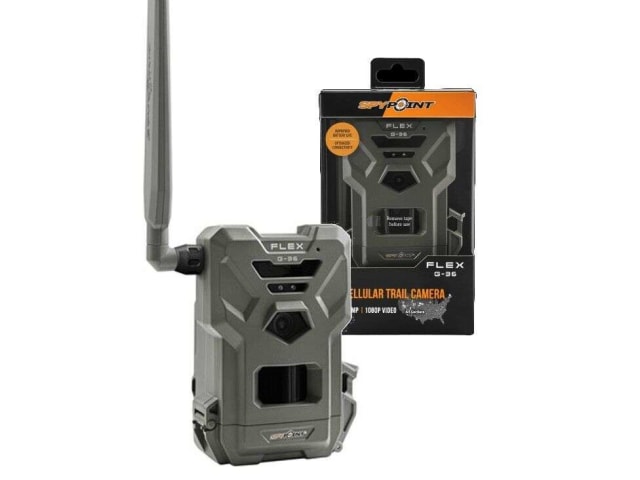
36MP photos, free data plan, and the best app in the category, the easiest way to get cellular scouting.
Placement and calendar
Roost in February, strut zones by March.
Place cameras at the base of known roost trees in February and early March to capture bird numbers before season. A strut zone, typically a field edge, logging road, or open woods floor, will show peak activity between 7 AM and 10 AM during the breeding season.
Turkeys are highly sensitive to foreign objects in their environment. Deploy cameras at least two weeks before season to allow birds to acclimate. Use only no-glow IR (940nm); any visible red or amber glow will alter behavior.
For dusting areas, use a wide-angle setup. A single bird kicking up dust can fill the frame and block the PIR trigger, leaving the rest of the flock uncaptured. Video mode captures flock size and gobbler-to-hen ratios better than burst still photos.
Related rankings
Go deeper.
Individual reviews
Camera-by-camera.
Other species
Trail cameras for other game.
Whitetail deer trail cameras
Scrapes, food plots, pinch points. Cellular vs SD card, no-glow vs standard IR, the deer hunter playbook.
Elk trail cameras
Long-range detection for wallows, meadows, and backcountry timber. Premium-tier territory.
Hog trail cameras
Nocturnal sounders, feeder sites, no-glow IR is non-negotiable.
Bear trail cameras
Lockbox-grade durability. Berry patches, baits where legal, travel corridors.
Frequently asked
Questions hunters actually ask.
Not sure which fits?
Run the 4-question camera finder.
Picks a camera based on connectivity, use case, power source, flash type, and budget.
Start the finder →