

Hunt Guide
Trail cameras for elk hunting.
Elk camera work runs different from whitetail. Larger home ranges, more rugged terrain, longer distances from trailheads, and elk that punish careless human scent. The right camera tier rewards careful planning across an entire season.

What this species demands
Premium gear pays off in elk country.
Elk trail camera work demands a different approach than whitetail hunting. Larger home ranges, more rugged terrain, and longer distances from trailheads create logistical challenges that reward premium equipment and careful planning. Elk are extremely sensitive to human scent and presence; the less frequently you visit a camera location, the better your results.
Long-range detection is critical for elk meadows and open terrain. The RECONYX HyperFire 2 with its 100-plus foot detection range and 0.2-second trigger speed excels in this environment. For backcountry deployments where battery changes are infrequent, battery life becomes one of the top selection criteria.
Wallows and mineral licks are the highest-yield camera locations for elk, particularly in the late-summer pre-rut period when bulls are using both heavily. Active scrapes and travel corridors between timber and open feed areas become productive as September approaches.
Starter picks
Three elk cameras to start with.
Premium SD card workhorse for true backcountry, long-range option for big meadows, and a cellular bridge for trips closer to trailhead coverage.
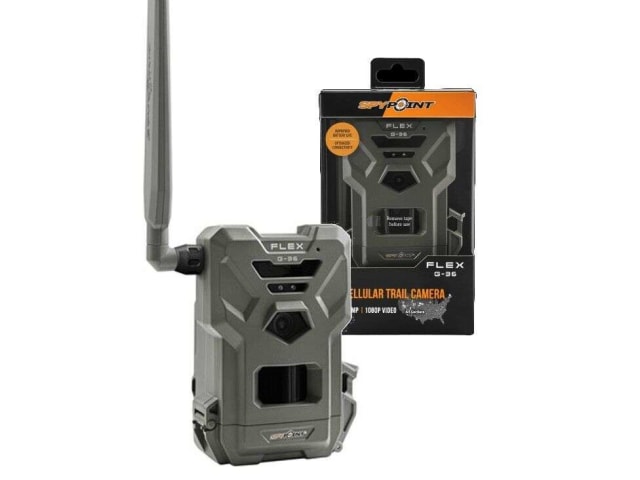
36MP photos, free data plan, and the best app in the category, the easiest way to get cellular scouting.
Placement and calendar
Wallows in summer, scrapes in September.
Wallows are the single most productive elk camera location from June through late August. Bulls and cows visit daily in warm weather, producing consistent close-range captures. In alpine terrain, place cameras on the downhill edge of wallows pointed slightly uphill for better head shots.
During the rut (September 5 to 30 in most western states), shift focus to active scrapes and bugling areas. Elk camera work rewards patience: plan for 30-day deployment minimums and use scent-eliminating gloves and rubber boots on every visit.
For truly remote locations, cellular cameras on multi-carrier networks (AT&T plus Verizon) provide coverage at more elevations than single-carrier models and can confirm elk presence before committing to a long hike in.
Related rankings
Go deeper.
Individual reviews
Camera-by-camera.
Other species
Trail cameras for other game.
Whitetail deer trail cameras
Scrapes, food plots, pinch points. Cellular vs SD card, no-glow vs standard IR, the deer hunter playbook.
Turkey trail cameras
No-glow setups for strut zones, roosts, and dust baths. Spring gobbler scouting.
Hog trail cameras
Nocturnal sounders, feeder sites, no-glow IR is non-negotiable.
Bear trail cameras
Lockbox-grade durability. Berry patches, baits where legal, travel corridors.
Frequently asked
Questions hunters actually ask.
Not sure which fits?
Run the 4-question camera finder.
Picks a camera based on connectivity, use case, power source, flash type, and budget.
Start the finder →