

Brand deep-dive· Since 1993
Every Cuddeback trail camera, reviewed and ranked.
Cuddeback has operated since 1993, with a long claim to introducing the modern trail camera in 1999. The current lineup is narrow: two cellular models built around fast trigger speeds. The CuddeLink L Series uses a mesh-network architecture that routes images from field cameras through a single hub, allowing a large property with multiple units to operate on one active cellular plan. The Tracks LTE is a single-camera cellular unit at $145.49, with dual-SIM flexibility for switching between carriers in fringe-coverage counties. Both cameras claim a 0.25-second trigger speed, competitive by current standards and matching benchmarks like Browning's Strike Force. Cuddeback is built for hunters who already understand camera placement and cellular network basics. The CuddeLink L Series fits multi-camera property managers; the Tracks LTE suits the budget-conscious cellular hunter at sub-$150.

Lineup snapshot
2
models reviewed
Connectivity mix
Brand Snapshot
Cuddeback | Founded: 1993 | Best for: serious whitetail hunters building multi-camera networked setups on pressured ground
Cuddeback established the modern trail camera category in 1999 and has since oriented its product development around trigger speed and network-linked camera arrays. The current two-model lineup, anchored by the CuddeLink L Series at $150 and the Tracks LTE at $110, sits in the cellular tier and shares a manufacturer-claimed 0.25-second trigger speed across both units.
Signature Positioning
Speed is the organizing principle behind Cuddeback's product philosophy.
Both active models carry a manufacturer-claimed 0.25-second trigger speed, a figure that places them well inside the sub-0.3-second range where mature bucks are captured mid-stride rather than as tail flashes. Most cellular cameras in the $100 to $180 price window publish trigger speeds of 0.5 to 1.0 seconds across their product pages. Cuddeback's specification sheets list half that figure or better for both the CuddeLink L Series and the Tracks LTE.
The CuddeLink L Series builds a second layer of differentiation on top of raw speed. Cuddeback publishes a mesh-networking architecture for this camera that routes images from multiple field units through a single hub, which then handles the cellular transmission. That design means a hunter running six cameras does not necessarily need six individual data plans, since the hub absorbs the uplink work. The manufacturer's product page describes a 940nm no-glow LED array on the L Series, a choice that produces zero visible illumination at the stand site. At heavily pressured locations where deer have associated flashing lights with danger, that specification matters for hunters who prioritize passive observation over image brightness.
The Tracks LTE approaches the same speed-first position from a connectivity angle. Amazon product listing data for the Tracks LTE describes a dual-SIM LTE configuration that allows the camera to switch between carrier networks, which matters in agricultural fringe areas where a single carrier's signal degrades seasonally. Both models list a 100-foot detection range and 20-megapixel image capture, confirmed through product listing data for each unit.
Cuddeback's price tier places these cameras above entry-level SD-card options and inside the competitive cellular window. At $110 for the Tracks LTE and $150 for the CuddeLink L Series, the brand asks buyers to pay for speed and network capability instead of feature volume.
Lineup That Wins
Multi-stand farms requiring image aggregation without per-camera data costs.
The CuddeLink L Series ($150) is the strongest fit here. A hunter running four to eight stand sites on a single property can position multiple L Series cameras in the field and route all image traffic through one hub unit, consolidating data delivery to a single cellular plan. Across available Amazon reviews for the L Series, averaging 4.6 stars, the most consistently mentioned feature is mesh-network reliability across distances that would otherwise require individual SIM-enabled cameras at each site. Verified purchasers on Amazon describe successful image delivery from cameras placed in creek bottoms and field edges that previously fell outside reliable single-unit cellular range.
Pressured public-land setups where LED flash spook is a documented problem.
The CuddeLink L Series ($150) addresses this scenario directly. The manufacturer's spec sheet lists a 940nm no-glow LED array. The camera produces no light visible to deer at the moment of trigger. On public-land parcels where camera pressure accumulates across multiple hunters throughout a season, eliminating flash entirely at a bedding-area camera can preserve the site's value across weeks. At $150 per unit, the L Series sits at a price point where a dedicated hunter can justify placing two or three cameras in sensitive areas without the full cost burden of top-tier cellular alternatives.
Fringe-coverage properties where single-carrier reliability is inconsistent.
The Tracks LTE ($110) is the fit here. Amazon listing documentation for the Tracks LTE describes dual-SIM LTE hardware that lets the camera select between available carrier signals instead of committing to one. Reliable. Across 28 Amazon reviews averaging 4.5 stars, the most praised characteristic is delivery consistency on properties where single-SIM cellular cameras had previously struggled. At $110, the Tracks LTE enters the cellular category at one of the lower hardware price points currently available, reducing the financial risk of deploying a camera in a location where coverage conditions are uncertain.
Buyer Profiles
The Networked-Farm Manager
A hunter managing multiple stand locations across a 200-to-500-acre property who wants consolidated image delivery without paying per-camera data plan fees. The CuddeLink L Series ($150) fits this workflow through its mesh-networking hub architecture, which handles multi-camera aggregation across the property. Cuddeback's product page describes the system as configured for exactly this scaled deployment pattern.
The Pressured-Stand Hunter
This buyer hunts a specific high-pressure site, such as a fence crossing, a scrape cluster, or a transition edge that receives consistent human intrusion from neighboring properties, and needs a camera that does not add light-based disturbance to an already-stressed location. The CuddeLink L Series ($150) and its 940nm no-glow array address this need at the specification level. The absence of visible flash at trigger is confirmed in the manufacturer's published LED spec for the model.
The Cellular-Entry Buyer Prioritizing Speed
A hunter moving from SD-card cameras to cellular for the first time, with a budget ceiling near $110 and a priority on trigger performance over feature count. The Tracks LTE ($110) carries the same 0.25-second trigger claim as the more expensive L Series, delivers dual-SIM connectivity for coverage flexibility, and enters the cellular market at a hardware price that Amazon reviewers have consistently described as strong value relative to the speed specification.
The Fringe-Coverage Operator
This buyer hunts properties on rural agricultural ground or timbered ridges where a single carrier's LTE signal is present but intermittent. The Tracks LTE ($110), with its dual-SIM configuration as documented in the product listing, addresses this scenario by allowing automatic network selection rather than forcing a single-carrier commitment at setup.
Sources
This overview draws on the following sources:
Top picks from Cuddeback
Standout Cuddeback models.

The Cuddeback Tracks LTE is a cellular trail camera targeting budget-conscious hunters who want remote image delivery and dual-SIM carrier flexibility without crossing the $150 hardware threshold.
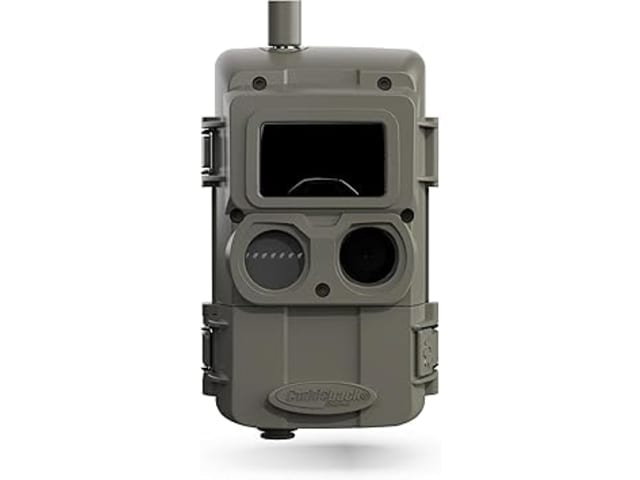
The Cuddeback CuddeLink L Series (LL-3A) is a no-glow cellular trail camera designed for hunters running multi-camera networks, using CuddeLink mesh protocol to route images through a single hub rather than billing per device.
The full lineup
All 2 Cuddeback cameras.
The Cuddeback Tracks LTE is a cellular trail camera targeting budget-conscious hunters who want remote image delivery and dual-SIM carrier flexibility without crossing the $150 hardware threshold.
The Cuddeback CuddeLink L Series (LL-3A) is a no-glow cellular trail camera designed for hunters running multi-camera networks, using CuddeLink mesh protocol to route images through a single hub rather than billing per device.
Frequently asked
Questions buyers ask about Cuddeback.
Other brands worth comparing
Brands in the same tier as Cuddeback.
RECONYX
RECONYX builds the gold standard professional trail cameras. Used by wildlife researchers, government agencies, and serious hunters who demand the absolute best in trigger speed and durability.
SPYPOINT
SPYPOINT pioneered the affordable cellular trail camera market with its free data plan and intuitive app. The go-to brand for hunters who want cellular scouting without the monthly bill.
Browning Trail Cameras
Browning Trail Cameras delivers hunter-grade reliability at competitive prices. Known for blazing trigger speeds and excellent low-light performance, they're a favorite for serious whitetail hunters.
Not sure which Cuddeback model fits?
Run the 4-question camera finder.
Picks a camera based on connectivity, use case, power source, flash type, and budget.
Start the finder →