

Category Guide
Non-cellular trail cameras. Pull the card, read it in the truck.
Non-cellular cameras (also called SD card or game cameras) record straight to a removable memory card. No data plan, no app, no cellular signal required. The format that has run hunting properties for two decades, still the cheapest and most rugged option in the category.

How the technology works
The simplest workflow in trail cameras.
A non-cellular trail camera pairs a PIR motion sensor with an image sensor and an SD or microSD card slot. When triggered, the camera saves photos and video locally. Nothing leaves the camera until you walk in, swap or read the card, and review images on a laptop, tablet, or dedicated card reader.
Because there is no cellular radio drawing constant power, battery life runs the longest of any trail camera category. Six to twelve months on a fresh set of AA batteries is normal under moderate trigger volume. Lithium batteries or solar panels extend that further.
Hardware prices start at roughly $50 for entry-level models and top out near $600 for premium professional units (Reconyx HyperFire 4K). The price-to-performance curve is the steepest in the category at the $100 to $200 tier.
The right fit
Where SD card cameras still win.
- Public-land hunters who refuse subscriptions on principle. No monthly fee, ever. Hardware cost is the lifetime cost. The original trail camera value proposition still holds.
- Multi-camera networks on owned property. Running 10 to 30 cameras at $80 each beats running 10 cellular cameras with 10 monthly plans. The math compounds quickly past 5 cameras.
- Backcountry and Canadian zones with zero cellular service. No carrier coverage means cellular cameras transmit nothing. SD cameras work the same in a Quebec timber lease as they do behind your house.
- Hunters who want maximum battery life and minimum maintenance. 6 to 12 months between battery changes is achievable on AA cells in moderate-trigger setups, longer on lithium. A camera you set in August and pull in January.
- Property owners watching pressured deer. No cellular radio, no app polling, no scheduled cloud uploads, no electronic signature whatsoever beyond the IR flash. The quietest electronic device you can place on a trail.
Top picks
Three SD card cameras to start with.
Entry-level reliability, the all-around mid-tier pick, and the premium pro option for hunters who want one camera to outlast every other gear purchase.
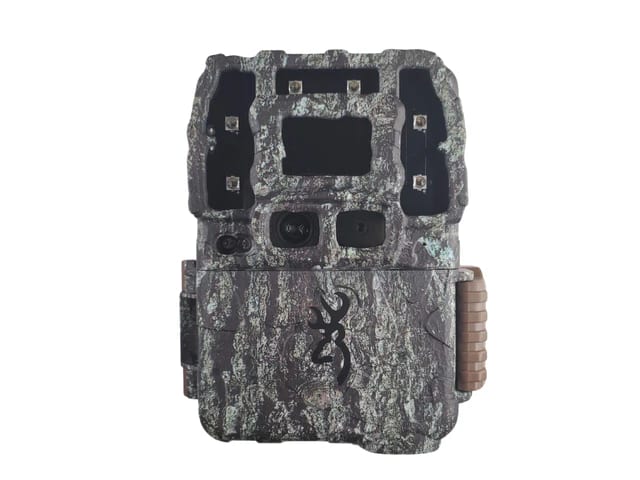
0.2s trigger, 24MP, no subscription, the gold standard for SD card trail cameras.

24MP no-glow flash with a 0.2-second trigger, the best invisible-flash camera for serious deer hunters under $150.

The RECONYX HyperFire 4K is a professional-tier trail camera built around 4K video capture, targeting wildlife researchers and serious hunters who trust the brand's long-standing reputation for detection reliability and rugged construction.
Related rankings
Go deeper.
Individual reviews
Camera-by-camera.
Other connectivity types
Compare the four trail camera categories.
Cellular trail cameras
Photos pushed to your phone over LTE within minutes. Best for active scouting on a recurring data plan.
Satellite trail cameras
Off-grid backcountry coverage where neither cellular nor WiFi reaches. Newer category, premium pricing.
WiFi trail cameras
Walk-up sync. Camera broadcasts its own short-range WiFi, phone connects via app, no subscription.
Frequently asked
Questions hunters actually ask.
Not sure which fits?
Run the 4-question camera finder.
Picks a camera based on connectivity, use case, power source, flash type, and budget.
Start the finder →