

Category guide · 3 top picks
Hunting
Cameras: What Hunters Actually Use
Hunting cameras for whitetail country — fast triggers, no-glow flash, full-season battery. Picks chosen for the stand, the food plot, and the lease you can't drive to.

Cross-referenced against state DNR regulations and Archery Talk threads, spring 2026.
The top picks
Three cameras to start with.

The Tactacam Reveal Pro 3.0 is a feature-dense cellular trail camera aimed at hunters and wildlife researchers who need remote image delivery, in-field LCD review, and GPS tagging across multi-network coverage areas.
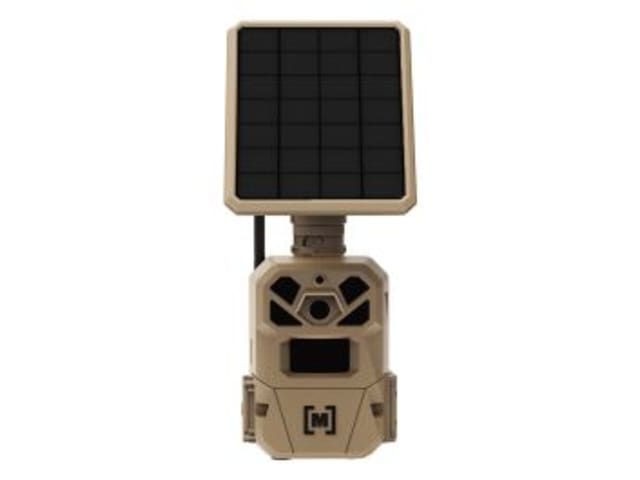
The Moultrie Edge Solar is a 40MP cellular trail camera with an integrated solar panel and rechargeable battery, designed to eliminate battery-swap trips on extended remote deployments.

The Moultrie Edge 3 Pro is a mid-tier cellular trail camera distinguished by a 50MP sensor, 1440p QHD video, integrated GPS, and app-side AI buck detection, positioning it as a feature-dense option for hunters managing multi-camera setups on pressured ground.
Hunting camera is what hunters call a trail camera when they're talking about it on hunting forums. The term shows up most in whitetail country (Pennsylvania, Wisconsin, Texas), and it's also the term that imports specific expectations: fast trigger speeds, no-glow infrared so you don't spook a buck on a third visit, and battery life that survives a full season without a card pull mid-rut.
The hunting use case is where the spec sheet starts mattering. A 0.5-second trigger gap means a buck stepping into a shooting lane gets photographed mid-stride; a 1.2-second gap means you photograph the empty trail behind him. Detection range matters more on bait or food plots (you want 80 feet or more) than on a pinch point where deer are already inside 30. And no-glow IR, invisible to deer eyes, is the difference between a cam that captures the same buck on five nights running and one that gets a single photo before the buck reroutes.
For most whitetail hunters, our best trail cameras for deer round-up will get you to a working setup faster than reading spec sheets. If you're hunting properties without cell service, the SD-card models in the best non-cellular trail cameras list are the ones that won't cost you a buck.
A note on legality. Several states (Arizona, Nevada, Utah, Montana) restrict or ban cellular trail cameras during specific hunting seasons. Check your state regulations before deploying cell cams on public land. The technology moves faster than the rule books, and a $300 camera doesn't help if it gets you cited or your tag pulled.
What public land hunters need
Public land changes the calculation. Theft is real. Lockable steel security boxes (Browning, Tactacam, and CamLockBox sell housings for their own units) cost $25 to $60 and pay for themselves the first time someone walks past a tree they thought looked easy. Pair the box with a Master Lock Python cable around the trunk, mount the unit 8 to 10 feet up at a downward angle, and pick no-glow IR so the camera isn't visible at night.
Cellular versus SD on public ground tilts toward SD for many hunters because cellular cameras advertise their location through the LTE pings, and they're the higher-value steal when they go missing. A Browning Strike Force Pro XD at $149 stings less when it disappears than a Tactacam Reveal Pro 3.0 at $249 plus the data plan you're still paying.
What private land hunters get to consider
Private leases and owned ground open up cellular without the theft anxiety, and that's where most of the technology gain in the past five years has come from. Sub-0.3-second triggers, real-time alerts when a target buck enters a frame, AI species filtering through Tactacam's app and Spypoint's Buck Tracker, and pattern-tracking dashboards that aggregate weeks of data into a movement summary your phone shows you on the drive in.
For most private-land hunters running 2 to 4 cameras across 80 to 200 acres, cellular pays for itself in time saved alone. The math: 30 minutes saved per card pull, 12 pulls per season per camera, 4 cameras, equals 24 hours of human-scent intrusion you didn't put on your stand. That's before counting the bucks you didn't push out.
State regulations to check before you buy
As of April 2026, four states have active restrictions on cellular trail cameras during portions of hunting season. Arizona prohibits cellular cams on public land statewide, year-round. Nevada bans cellular trail cameras for hunting use from August 1 through December 31. Utah restricts cellular cams during big-game seasons. Montana bans cellular trail cameras between July 15 and December 31 on all public land. Several other states (Idaho, New Mexico, Pennsylvania) are reviewing similar legislation in 2026 sessions.
The trend is tightening, not loosening. Confirm your state agency's current rules at the wildlife commission's website before deploying cellular cameras on public ground or for any hunting purpose.
Setup tips that move the needle
Most camera failures aren't hardware. They're placement. A camera on the wrong tree at the wrong angle will produce 200 photos of empty trail per week and miss the buck that walked through at 5:43 a.m. on Tuesday. A few rules from hunters who run multi-camera setups across the country.
Mount height matters more than angle. The standard 4 feet off the ground points the camera at deer-shoulder height, which sounds right and produces decapitated photos. Bump the height to 5.5 or 6 feet and angle the camera 8 to 12 degrees downward. You catch the full body, miss the squirrel false triggers at ground level, and put the unit out of theft reach.
Direction relative to the sun decides night image quality. North-facing cameras produce the cleanest IR night images because no daytime sun glare burns out the sensor. East-facing units capture too much sunrise glare during October. West-facing units lose entire days to sunset blowout. South is acceptable in winter when the sun stays low.
Distance from the trail comes in third. The IR flash array on most consumer cameras is calibrated for 25 to 50 feet. Mounting at 8 to 12 feet from the active trail puts the deer in the optimal IR range and inside the PIR detection zone simultaneously. Closer than 6 feet means motion-blurred photos of partial deer. Farther than 60 feet produces dim, grainy night images and a high false-trigger rate from wind moving distant brush.
One last placement habit that pays off: photograph the setup itself before you walk away. A phone shot of the camera, the trail, and your reference tree saves a lot of guesswork in November when you're trying to find the unit again under fresh leaf-fall. Mark the location in onX or HuntStand at the same time. The 90 seconds you spend doing this in July is the difference between a productive November check and a frustrated 40-minute search.
Related rankings
Go deeper.
Individual reviews
Camera-by-camera.
Frequently asked