
Category guide · 4 top picks
Trail
Cameras: What They Are, Who Uses Them, Which Ones Work
Trail cameras explained: types, use cases, and our research-based picks for 2026. Cellular, SD card, no-glow, solar — sorted by what actually works in the field.

Based on 60+ hours of spec research across 51 cameras and 11 brands.
The top picks
Where to start.

The Tactacam Reveal Pro 3.0 is a feature-dense cellular trail camera aimed at hunters and wildlife researchers who need remote image delivery, in-field LCD review, and GPS tagging across multi-network coverage areas.
0.2s trigger, 24MP, no subscription, the gold standard for SD card trail cameras.

The RECONYX HyperFire 4K is a professional-tier trail camera built around 4K video capture, targeting wildlife researchers and serious hunters who trust the brand's long-standing reputation for detection reliability and rugged construction.

The GardePro E6 is a mid-range Wi-Fi-enabled trail camera aimed at hunters and wildlife watchers who want high-resolution stills and wireless connectivity without a cellular subscription.
Overview
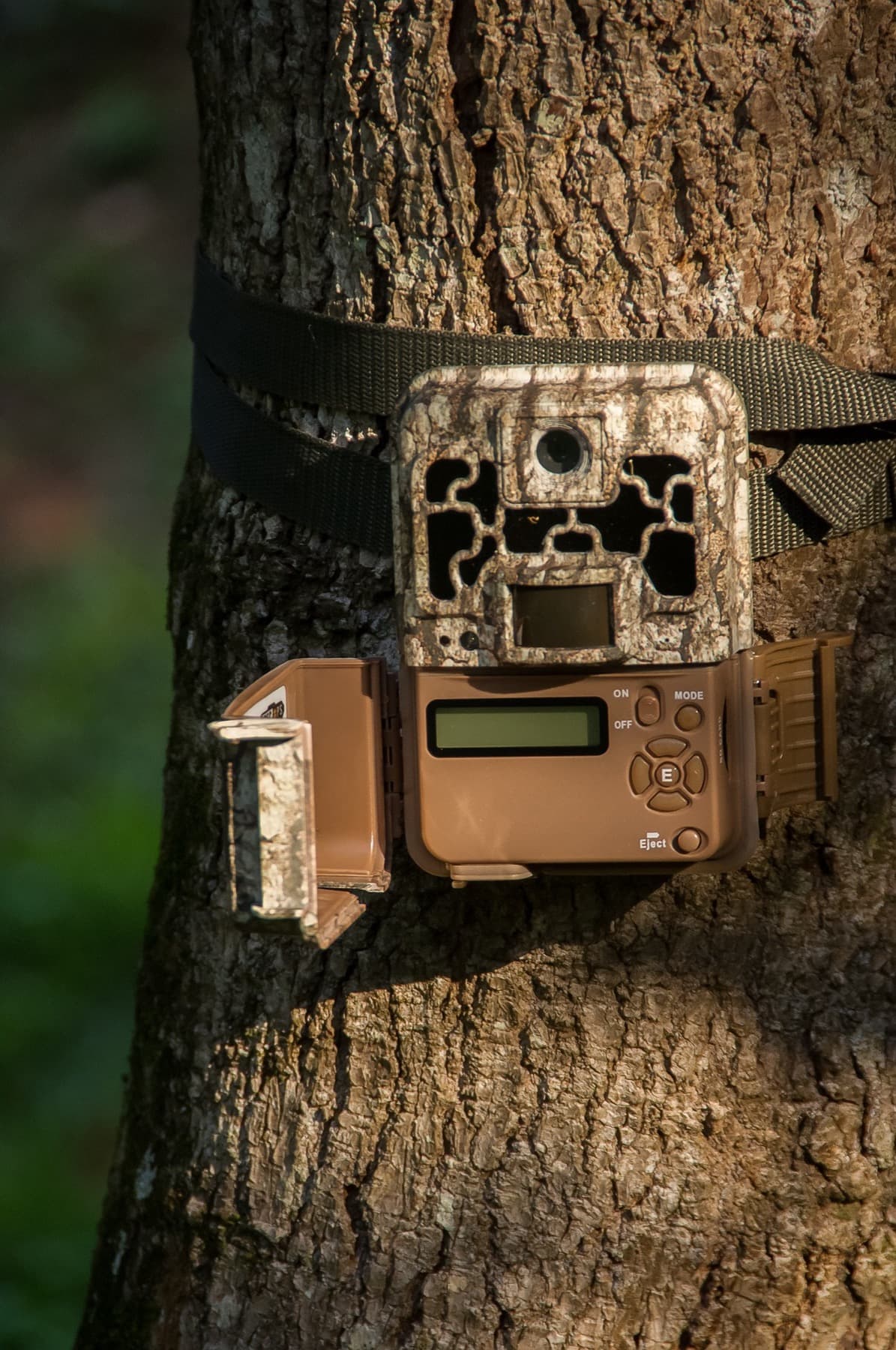
Trail cameras are battery-powered, weather-resistant cameras that use passive infrared sensors to detect animal movement and capture photos or video automatically. Hunters, wildlife managers, and property owners deploy them on tree lines and fence gaps, on food plots and creek crossings, to inventory wildlife without a human presence at the site.
The category splits into two broad types. Non-cellular cameras store images on an SD card that you physically retrieve. Cellular cameras transmit photos to a smartphone app over LTE networks, so you can monitor a site without returning to it. That single distinction shapes most of the buying decisions on this page.
Four variables drive the right choice for most buyers: cellular versus non-cellular connectivity, image resolution and trigger speed, flash type (white-flash, infrared, or no-glow black infrared), and power source. Prices run from roughly $50 for a capable non-cellular entry model to $170 and above for solar cellular cameras with no-glow flash.
This guide covers the full category. The Top Picks section above highlights the cameras our research identifies as the strongest options for most buyers. The sections below explain how we arrived at those conclusions, walk through the key decisions in detail, and match specific cameras to specific buyer situations.
How We Researched This Category
BestTrailCamera is a research-only editorial operation. No cameras were physically deployed, and no images or detection events were produced by our staff.
Our research drew on three primary sources. We cross-referenced published manufacturer specifications for each camera in the catalog, including trigger speed ratings, detection range, and flash classifications as stated in official product documentation. We then analyzed aggregated customer feedback across verified Amazon reviews, focusing on patterns in image quality reports and app performance across hundreds of individual responses. Third, we incorporated coverage from wildlife and hunting publications that have independently assessed cameras in this category.
A few scope clarifications apply. Trigger-speed figures reflect what manufacturers publish in their official specifications. Cellular coverage quality varies by geography and carrier, so buyers should verify AT&T or Verizon signal strength at their specific deployment sites before purchasing a cellular model. Battery life figures cited here come from manufacturer documentation or owner feedback in aggregated Amazon reviews. Where buyer-reported data and manufacturer specifications pointed in different directions, we weighted the aggregated review data more heavily in our analysis.
The Big Decisions
Cellular or non-cellular. This is the first decision, and it affects price, ongoing cost, and how the camera fits into a scouting workflow. Non-cellular cameras, including the SPYPOINT Force 24 at $49.99 and the Browning Strike Force Pro XD at $169.99, require physical SD card retrieval. Periodic site visits can disturb the area you're trying to scout. Cellular cameras send images directly to your phone. The SPYPOINT FLEX G-36 ($99.99) includes a free data plan, which removes the subscription cost that historically made cellular cameras harder to justify at lower price points. Amazon review patterns show that users monitoring remote properties or running multiple cameras across a large area report reduced site disturbance and higher volumes of usable scouting data when switching to cellular transmission.
Flash type and detection sensitivity. Standard infrared flash is invisible to humans in normal lighting but produces a faint red glow at night that some hunters believe alerts deer over time. No-glow black infrared flash is fully invisible. The SPYPOINT Flex-DARK ($119.99) and the Browning Dark Ops HD Pro X ($139.99) both use no-glow flash technology. Owner feedback on Amazon identifies this feature as the primary reason those models get selected for high-pressure public land situations. White-flash cameras produce color nighttime images at the cost of visibility. Resolution figures range from 24MP on the SPYPOINT Force 24 to 48MP on the SPYPOINT Force 48 ($69.99). Higher megapixel counts support cleaner crops for individual animal identification, though manufacturer documentation notes that pixel count alone does not determine image quality.
Power source and deployment duration. Most trail cameras run on AA batteries. Buyers planning long deployments in remote locations or cold-weather climates have two solar-assisted options in this catalog. The SPYPOINT Flex-S-DARK ($169.99) pairs no-glow cellular performance with a solar panel designed to extend battery life significantly between service visits. The SPYPOINT Force Pro S 2.0 ($149.99) takes a similar approach for a non-cellular 4K workflow. Manufacturer documentation for both models describes solar charging as supplemental rather than primary, so standard batteries remain necessary.
Budget and feature prioritization. The SPYPOINT Force 24 at $49.99 represents the functional floor of this catalog: 24MP stills, a 70-foot detection range, and no subscription required. Buyers who need basic inventory data from a single site and check cards frequently find it sufficient. Stepping to $69.99 for the SPYPOINT Force 48 adds 48MP resolution and an 80-foot detection range. The jump to cellular, starting with the SPYPOINT Flex-M at $79.99 with dual-SIM carrier coverage, reflects a meaningful increase in capability alongside a shift in how the camera integrates into a scouting workflow.
Where to Start
Budget-focused non-cellular buyers should start with the SPYPOINT Force 24 ($49.99) for basic coverage or step up to the SPYPOINT Force 48 ($69.99) if resolution and detection range matter more. Both cameras require no ongoing subscription and suit hunters who check their properties regularly.
Buyers who want cellular access without a subscription fee should look at the SPYPOINT FLEX G-36 ($99.99) first. Its free data plan, dual-carrier support, and 36MP image quality represent strong value at that price. For sites with uncertain cellular coverage, the SPYPOINT Flex-M ($79.99) uses dual-SIM technology to automatically select between AT&T and Verizon depending on signal availability.
Hunters prioritizing covert nighttime performance on pressured land should consider the SPYPOINT Flex-DARK ($119.99) or the Browning Dark Ops HD Pro X ($139.99). Both use no-glow black infrared flash. Browning's product documentation describes the Dark Ops HD Pro X as the brand's fastest-trigger model in that price class.
Long-deployment and low-maintenance buyers should evaluate the SPYPOINT Flex-S-DARK ($169.99) or the SPYPOINT Force Pro S 2.0 ($149.99). Both use solar-assisted charging to reduce how often batteries require attention. The Flex-S-DARK adds cellular transmission and no-glow flash for buyers who want remote monitoring alongside extended runtime.
Related rankings
Go deeper.
Individual reviews
Camera-by-camera.
Frequently asked