

Category Guide
Cellular trail cameras. Photos pushed to your phone over LTE.
Cellular cameras transmit images over the same LTE networks your phone uses. A camera triggers at 3 AM on a remote food plot and the photo lands in the manufacturer app within minutes. Several brands now bundle a free 100-photo monthly tier.

How the technology works
The camera carries its own LTE modem.
Each cellular trail camera contains a small built-in LTE modem and a SIM card slot. When the PIR sensor triggers, the camera captures a photo, compresses it, and uploads through AT&T, Verizon, or T-Mobile (depending on the model and SIM). The image lands on the manufacturer cloud server, then pushes to the smartphone app.
No home WiFi router is required. No SD card retrieval is required. The single hard requirement is cellular coverage at the camera location: if your phone gets at least one bar of LTE there, the camera most likely will too. Multi-carrier models with dual-SIM (auto-switching between AT&T and Verizon) widen the coverage envelope.
Battery life runs shorter than SD-card cameras because the cellular radio draws power on every transmission. Plan for 45 to 120 days under normal use on AA batteries, longer with lithium or solar.
The right fit
Where cellular shines.
- Active scouting on properties you visit weekly or less. Real-time photo delivery removes the need to walk in and pull SD cards, which preserves the scent-free quiet a mature buck has come to expect on his core area.
- Multi-camera farm or lease management from home. Running 5 to 15 cameras across a property turns into one app dashboard. You see overnight activity at first coffee, before the truck moves.
- Properties with at least one carrier of LTE coverage. Multi-carrier dual-SIM cameras (Browning Defender Pro Scout Max, Bushnell Cellucore 20, Reconyx Hyperfire 4K Cellular) auto-switch to whichever network has stronger signal at the install point.
- Hunters who use one of the brands with a free data tier. SPYPOINT and Tactacam both ship with 100 free photos per month included. For a single camera on a moderate-traffic location, that ceiling can carry a full early-season pattern phase.
Top picks
Three cellular cameras to start with.
These three cover the common cellular use cases: free-plan entry, premium dual-carrier, and value mid-range.
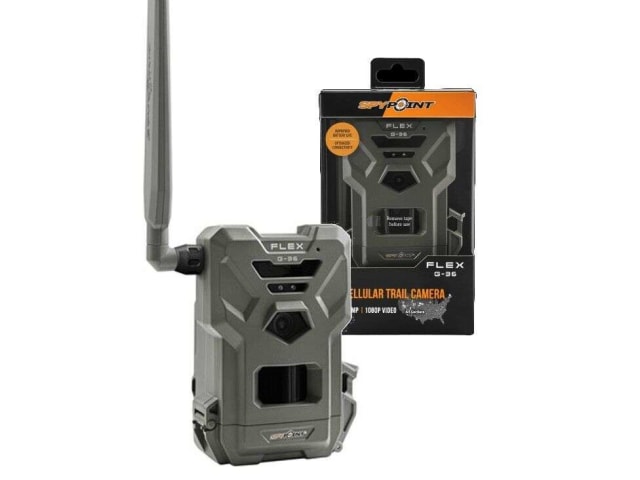
36MP photos, free data plan, and the best app in the category, the easiest way to get cellular scouting.

The Tactacam Reveal Pro 3.0 is a feature-dense cellular trail camera aimed at hunters and wildlife researchers who need remote image delivery, in-field LCD review, and GPS tagging across multi-network coverage areas.

The Moultrie Edge 3 Pro is a mid-tier cellular trail camera distinguished by a 50MP sensor, 1440p QHD video, integrated GPS, and app-side AI buck detection, positioning it as a feature-dense option for hunters managing multi-camera setups on pressured ground.
Related rankings
Go deeper.
Individual reviews
Camera-by-camera.
Other connectivity types
Compare the four trail camera categories.
Satellite trail cameras
Off-grid backcountry coverage where neither cellular nor WiFi reaches. Newer category, premium pricing.
WiFi trail cameras
Walk-up sync. Camera broadcasts its own short-range WiFi, phone connects via app, no subscription.
Non-cellular trail cameras
SD card pulls only. Lowest hardware price, longest battery life, zero subscriptions.
Frequently asked
Questions hunters actually ask.
Not sure which fits?
Run the 4-question camera finder.
Picks a camera based on connectivity, use case, power source, flash type, and budget.
Start the finder →