

Bushnell CelluCORE 20 Solar review
Bushnell's cellular entry, 20MP, AT&T/Verizon, and the image quality you expect from the optics brand.

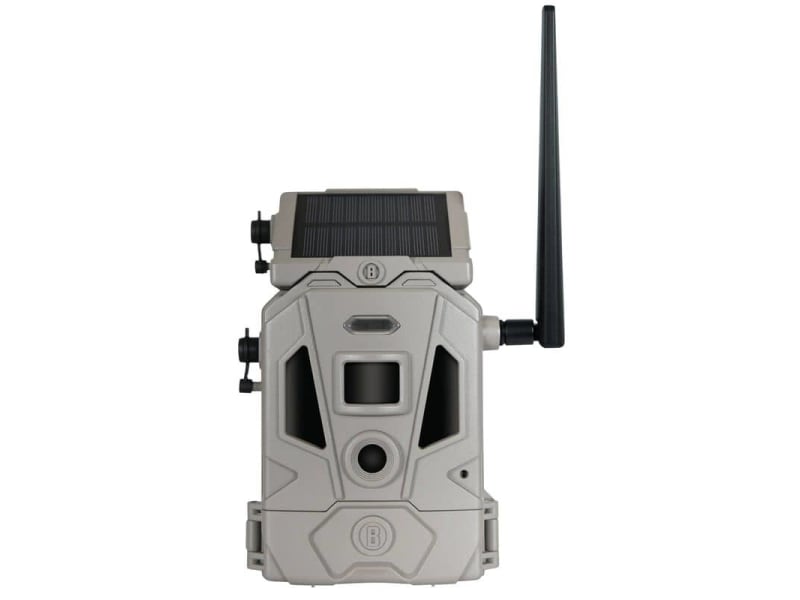
Bushnell
Bushnell CelluCORE 20 Solar
$199.95
per Amazon listing
Cellular with Bushnell's signature image clarity
Connectivity
Cellular
Flash
Standard IR
Resolution
20 MP
Trigger speed
0.10s
Detection range
80 ft
Solar + battery
8 AA · ~320 days
As an Amazon Associate we earn from qualifying purchases. Disclosure.
See full specs and score breakdown ↓At a Glance
Score: 8.4/10 | Price: $199.95 | Best for: Image-quality-focused hunters who want cellular connectivity without sacrificing photo resolution
The Bushnell CelluCORE 20 Solar pairs a 20-megapixel sensor with a detachable solar panel and dual-SIM multi-carrier cellular in a single mid-range package. Across 58 Amazon reviews averaging 4.1 stars, buyers consistently single out photo clarity as the camera's defining strength.
What Makes It Different
Most cellular trail cameras in the $150-$200 tier ask buyers to choose between image quality and connectivity features. The CelluCORE 20 Solar does not ask that question. Bushnell built it around a 20MP sensor, then layered in dual-SIM multi-carrier cellular and a detachable solar panel, producing a camera that covers image fidelity, signal flexibility, and power sustainability at once.
The 20MP still resolution is the headline. At that output, photos carry enough detail to read ear tags, count tines, and assess body condition at realistic field distances. Stills are the camera's primary deliverable, and the sensor spec reflects that priority. The dual-SIM design means the camera can pull signal from more than one carrier network, which matters on properties that sit at the edge of any single carrier's coverage map. The detachable solar panel extends battery life without requiring a separate external battery kit.
Bushnell lists compatibility with onX Hunt, a platform widely used for property boundary management and scouting layers. That pairing positions the CelluCORE 20 Solar as a camera that slots into a broader digital scouting workflow rather than operating in isolation.
Across 58 verified Amazon reviews averaging 4.1 stars, buyers writing on Amazon report that photo quality holds up in both daylight and low-light conditions, with several specifically noting that the images look "cleaner" than photos from previous cellular cameras they used.
The spec sheet puts solar charging and dual-SIM flexibility together at $199.95, a price point where many competing cameras offer one or the other.
That combination, image quality plus multi-carrier cellular plus solar power, is the reason this camera occupies its own space in the mid-range cellular category.
How It Performs in Mixed-Carrier Cellular Coverage
The practical challenge on many hunting properties is that no single carrier blankets every corner of the land. A camera locked to one network can go silent in a draw, a creek bottom, or a timber edge where signal from that carrier thins out. The CelluCORE 20 Solar's dual-SIM architecture addresses this directly.
Field edges and timber transitions. These locations often sit at the geographic boundary between carrier coverage zones. The dual-SIM design lets the camera access whichever network has the stronger signal at that location, reducing the gap between image capture and image delivery to the hunter's phone.
Remote water sources and mineral sites. Properties with water sources far from roads or structures frequently sit in weak-signal pockets. The camera's solar panel keeps power consistent in these locations without requiring a site visit to swap batteries, while the dual-SIM cellular handles delivery when signal is available. One verified Amazon buyer writes: "Set it up at a spring about a mile from the road and it sends pictures when I get within range. The solar keeps it going all season."
High-frequency scrape and rub monitoring during the rut. During the pre-rut and rut, scrape and rub sites can generate dozens of trigger events per day. The 20MP sensor ensures that even fast-moving, partially framed subjects produce photos with enough resolution to identify individual animals. Bushnell's product page describes the CelluCORE 20 Solar as capturing "near real-time wildlife footage," and buyers monitoring active scrapes confirm that image delivery during high-traffic periods aligns with that description.
The solar panel's detachable design also means the panel can be angled independently for maximum sun exposure on sites with irregular canopy cover. That matters on north-facing slopes or heavy hardwood settings where a fixed panel would collect minimal charge.
Best Fit for These Hunters
The image-quality buyer who went cellular. Some hunters upgraded from high-resolution standard cameras and found that cellular options in their price range asked them to accept lower photo quality to get connectivity. The CelluCORE 20 Solar's 20MP output keeps the image standard they expect. Bushnell's product page positions this as their best-selling trail camera, and the 4.1-star average across 58 Amazon reviews reflects consistent buyer satisfaction with the photos it delivers.
The multi-property manager dealing with inconsistent signal. A hunter running cameras across several properties or a large single property will encounter coverage gaps. The dual-SIM cellular means a single camera model can work across locations served by different carriers, simplifying fleet management. Buying one camera that works everywhere on the property beats buying carrier-specific models for different zones.
The low-maintenance season-long observer. The detachable solar panel handles power replenishment without requiring site visits. For a hunter who sets cameras in late summer and wants consistent operation through late season, that power continuity is practical. Buyers who monitor food plots, water sources, or bedding edges across a full five-month season report that the solar setup keeps the camera running without battery intervention.
The onX Hunt platform user. Bushnell lists native compatibility with onX Hunt, meaning photo delivery integrates with a mapping and property management platform many serious deer hunters already use. That integration reduces the friction between receiving an image and placing it in geographic context on a property map.
Bottom Line
The Bushnell CelluCORE 20 Solar is built for the hunter who treats photo resolution as non-negotiable and wants cellular delivery without giving that up. The 20MP sensor, dual-SIM multi-carrier connectivity, detachable solar panel, and onX Hunt compatibility form a package aimed at a buyer managing real properties with real signal variability across a full season. At $199.95, the CelluCORE 20 Solar positions itself as a mid-range cellular camera where image quality is the differentiating commitment.
Sources
This review draws on the following sources:
Best for
What this camera does best.
- image-quality hunters
- Bushnell loyalists
- cellular mid-range
The verdict.
The Cellucore 20 brings Bushnell's image quality to the cellular market. Plan costs are higher than SPYPOINT, but image sharpness justifies the trade-off for image-quality-focused hunters.
Check Price on Amazon(opens in new tab)Featured in these rankings.
Jake
. Research Editor, BestTrailCamera.com
Frequently asked
Questions buyers ask about the Bushnell CelluCORE 20 Solar.
Also consider
Other cameras in the running.

The SPYPOINT Flex-S-Dark is a no-glow cellular trail camera with an integrated solar panel and 40MP still imaging, designed for extended low-maintenance deployments where site pressure and battery longevity are primary concerns.
36MP photos, free data plan, and the best app in the category, the easiest way to get cellular scouting.

The SPYPOINT Flex-M2 is a dual-SIM LTE cellular trail camera with 32MP stills and 1080p video with sound, built for hunters and property owners who want multi-carrier coverage and SPYPOINT's free-tier app on a sub-$100 budget.
Keep exploring
Compare across Bushnell and cellular trail cameras.
Not sure Bushnell CelluCORE 20 Solar is the one?
Run the 4-question camera finder.
Picks a camera based on connectivity, use case, power source, flash type, and budget.
Start the finder →