

Brand deep-dive· Since 2004
Every SPYPOINT trail camera, reviewed and ranked.
SPYPOINT, founded in 2004, built its reputation on one decision: pairing cellular trail cameras with a no-cost data plan that transmits up to 100 photos per month. The current lineup spans seven models priced roughly $80 to $170 across two tracks. The cellular track (FLEX G-36, Flex M, Flex Dark, Flex S Dark) handles remote image delivery on AT&T and Verizon through the SPYPOINT app. The non-cellular track (Force 24, Force 48, Force Pro S 2.0) targets buyers scouting accessible properties. The FLEX G-36 at $139.99 is the editorial pick, combining the no-cost plan with a 0.3-second trigger and 100-foot detection range. The Flex M adds dual-SIM LTE failover for mixed-carrier terrain, and the Flex S Dark and Force Pro S 2.0 integrate solar panels at mid-tier prices. Hunting-specific design choices run through every model.

Lineup snapshot
8
models reviewed
Connectivity mix
Brand Snapshot
SPYPOINT | Founded: 2004 | Best for: hunters who want cellular scouting without a monthly subscription
SPYPOINT built its identity around one concrete promise: cellular photo delivery at a price that doesn't require a separate data budget. Across 7 current models spanning $49.99 to $169.99, the lineup covers passive SD-card cameras and solar-assisted no-glow cellular units, held together by a proprietary app that handles multi-camera management from a single dashboard.
Signature Positioning
SPYPOINT entered the trail camera market in 2004 with a specific thesis: cellular connectivity should not cost more than the camera itself. That thesis still shapes every product decision the brand makes.
The free-plan model works.
The clearest expression of it is the FLEX G-36, priced at $99.99. SPYPOINT publishes a 0.3-second trigger speed and a 100-foot detection range for this model, pairing those specs with a free monthly data tier that transmits up to 100 images at no additional cost. For a hunter running three or four cameras across a property, that free tier eliminates a recurring line item entirely. Dual-carrier compatibility across AT&T and Verizon is listed on the manufacturer's product page as a core differentiator at this price point, alongside 36-megapixel still resolution.
The brand's no-subscription commitment extends upward into the solar-assisted category. Manufacturer specs for the FLEX-S-DARK ($169.99) list 40-megapixel stills, 1080p video with audio, an integrated solar panel, and no-glow infrared LEDs. Solar integration at $169.99 is an unusual specification for a camera with built-in cellular capability, and the product page positions this model explicitly for long deployments where battery access is infrequent.
Non-cellular options round out the lineup without abandoning the brand's value orientation. The Force Pro S 2.0 ($149.99) carries a 0.2-second trigger speed and a 110-foot detection range, along with 48-megapixel stills and onboard solar power. No subscription. No plan management. The Force 48 ($69.99) takes a different angle: 48-megapixel resolution and a built-in LCD screen for field configuration at a fixed one-time cost.
What holds the lineup together is the SPYPOINT app. Across all current cellular models, the app serves as the single interface for image delivery, camera settings, and plan management. SPYPOINT's published materials describe it as compatible with all current cellular models on both iOS and Android, a consistency that matters when a hunter is managing several cameras across one season.
Lineup That Wins
Scenario 1: High-volume cellular scouting on a budget
The FLEX G-36 at $99.99 fits hunters who want cellular delivery across multiple stand locations without paying per-camera monthly fees. The manufacturer lists a 100-foot detection range and a 0.3-second trigger speed. Across more than 4,000 Amazon reviews averaging 4.3 stars, the most consistently praised features are the free data plan and app reliability. For a hunter running four cameras, four free plans represent real savings compounded across a full season.
Scenario 2: Pressured scrapes and pinch points requiring covert flash
No-glow infrared means zero visible red pulse at night. Deer in high-traffic areas often develop flash sensitivity after repeated exposure to visible LED illumination. The FLEX-DARK ($119.99) and the FLEX-S-DARK ($169.99) both carry no-glow IR flash according to their respective manufacturer specifications, with the solar-equipped FLEX-S-DARK adding extended-deployment capability for sites where battery swaps would disturb the location. Amazon buyers reviewing the FLEX-DARK identify minimal camera shyness on scrape lines as a recurring observation across long-form reviews.
Scenario 3: Remote long-deployment coverage with no subscription
A hunter running cameras on public land or remote private ground, checking cards once every six to eight weeks, needs a camera that sustains itself and captures detail without a cellular plan. The Force Pro S 2.0 at $149.99 is the brand's answer. Where the FLEX G-36 prioritizes cellular delivery, this model prioritizes passive durability: 4K video, 48-megapixel stills, a built-in solar panel, and a 0.2-second trigger response across a 110-foot zone. A sampling of long-form Amazon reviews for this model highlights solar longevity and image sharpness as the two features buyers reference most.
Buyer Profiles
The Cellular-First Value Hunter
This buyer wants images on their phone the same day deer move through. The FLEX G-36 at $99.99 delivers cellular photo transmission, a free data plan covering up to 100 images per month, 36-megapixel stills, and dual-carrier support. For most whitetail hunters with moderate photo volume, the free tier is sufficient through summer scouting and early season without any plan upgrade.
The Pressured-Ground Bowhunter
Scrapes. Funnels. Deer that have seen flash before. The FLEX-DARK at $119.99 provides no-glow infrared and cellular transmission in a single package, with 40-megapixel stills and 1080p video with audio. Zero visible flash at night is the specification this buyer is purchasing, and that specification is non-negotiable.
The Long-Deployment Passive Camera User
This buyer sets cameras in spring and pulls cards in fall. The Force Pro S 2.0 at $149.99 covers that workflow: solar-assisted power, 48-megapixel resolution, 4K video, and a 110-foot detection zone. No subscription cost. No monthly decision required.
The Budget-Conscious First-Timer
Entry price matters most here. The Force 24 at $49.99 lists 24-megapixel stills and a 70-foot detection range, according to the manufacturer's product page. Non-cellular by design, total ownership cost is fixed at purchase with no downstream fees attached.
Sources
This overview draws on the following sources:
Top picks from SPYPOINT
Three highest-scoring SPYPOINT models.
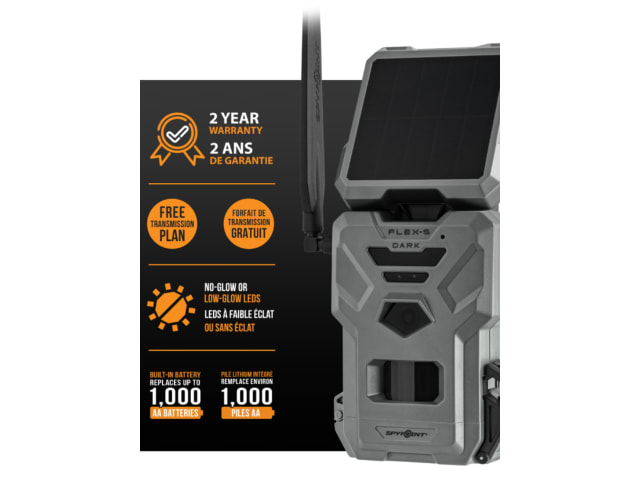
The SPYPOINT Flex-S-Dark is a no-glow cellular trail camera with an integrated solar panel and 40MP still imaging, designed for extended low-maintenance deployments where site pressure and battery longevity are primary concerns.
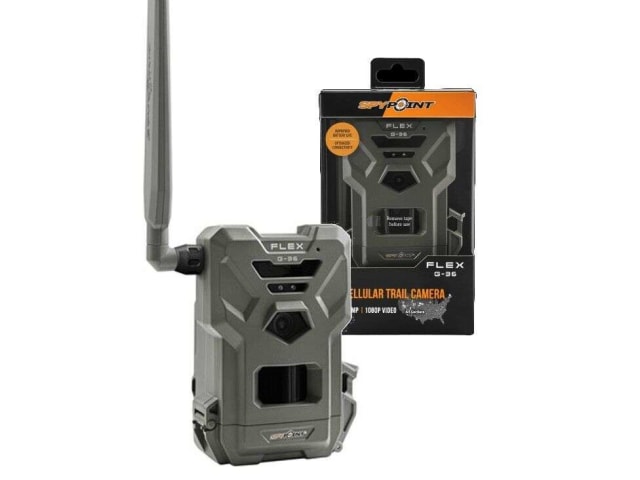
36MP photos, free data plan, and the best app in the category, the easiest way to get cellular scouting.
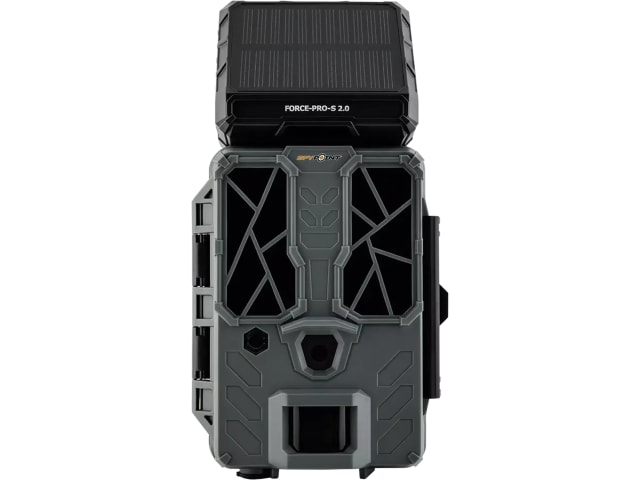
The SPYPOINT Force Pro S 2.0 is a non-cellular, solar-assisted trail camera targeting hunters and wildlife monitors who need extended unattended deployment with 4K video capability.
The full lineup
All 8 SPYPOINT cameras.

The SPYPOINT Flex-S-Dark is a no-glow cellular trail camera with an integrated solar panel and 40MP still imaging, designed for extended low-maintenance deployments where site pressure and battery longevity are primary concerns.
36MP photos, free data plan, and the best app in the category, the easiest way to get cellular scouting.

The SPYPOINT Force Pro S 2.0 is a non-cellular, solar-assisted trail camera targeting hunters and wildlife monitors who need extended unattended deployment with 4K video capability.

The SPYPOINT Flex-M2 is a dual-SIM LTE cellular trail camera with 32MP stills and 1080p video with sound, built for hunters and property owners who want multi-carrier coverage and SPYPOINT's free-tier app on a sub-$100 budget.

The SPYPOINT Flex Dark is a no-glow cellular trail camera aimed at hunters who need discreet nighttime surveillance with app-based remote image delivery and 40MP stills.
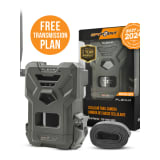
The SPYPOINT Flex-M is a dual-SIM LTE cellular trail camera offering 28MP stills and IP65 weather resistance, positioned for hunters and property owners who need automatic carrier fallback in areas with inconsistent network coverage.
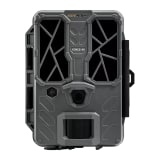
The SPYPOINT Force 48 is a budget-oriented, SD-card-based trail camera offering 48MP photo resolution and an 80-foot detection range for hunters who want high-resolution stills without a cellular subscription.

The SPYPOINT Force 24 is a budget-oriented, non-cellular trail camera offering 24MP stills and a claimed 70-foot PIR detection range, designed for hunters scouting areas without cellular coverage.
Frequently asked
Questions buyers ask about SPYPOINT.
Other brands worth comparing
Brands in the same tier as SPYPOINT.
Browning Trail Cameras
Browning Trail Cameras delivers hunter-grade reliability at competitive prices. Known for blazing trigger speeds and excellent low-light performance, they're a favorite for serious whitetail hunters.
Moultrie
Moultrie has been in the trail camera game since 1980. Their Mobile cellular cameras offer solid performance at every price point, with a capable app and broad carrier support.
Tactacam
Tactacam disrupted the cellular camera market with its Reveal series. Clean app, competitive data plans, and a loyal following among hardcore deer hunters.
Not sure which SPYPOINT model fits?
Run the 4-question camera finder.
Picks a camera based on connectivity, use case, power source, flash type, and budget.
Start the finder →