

Stealth Cam Revolver Pro 2.0 review
The Stealth Cam Revolver Pro 2.0 is a cellular trail camera built around full-circle horizontal coverage via Stealth Cam's Auto-Scan system, making it a candidate for hub-trail intersections and bait-site surveillance where a single camera must monitor multiple angles.


Stealth-cam
Stealth Cam Revolver Pro 2.0
$149.99
per Amazon listing
360° cellular coverage from a single mount point
Connectivity
Cellular
Flash
No-glow IR
Resolution
40 MP
Trigger speed
0.40s
Detection range
100 ft
Battery
16 AA
As an Amazon Associate we earn from qualifying purchases. Disclosure.
See full specs and score breakdown ↓At a Glance
Score: 7/10 | Price: $149.99 | Best for: Hunters replacing multiple fixed-angle cameras with a single cellular unit on properties where both Verizon and AT&T signals are present
The Stealth Cam Revolver Pro 2.0 is built around one idea: full-arc coverage from a single mount point. Its 360° Auto-Scan mechanism, dual-carrier cellular compatibility, and 40-megapixel still resolution make it a distinctive entry in the mid-range cellular tier.
What Makes It Different
Most cellular trail cameras ask hunters to pick a carrier and a fixed angle. The Revolver Pro 2.0 does neither. That's the short version. Its 360° Auto-Scan system rotates the camera through a full arc from one mounting position, and its cellular radio supports both Verizon and AT&T networks, a combination that is genuinely unusual at the $149.99 price point.
The published spec sheet lists trigger speed at 0.4 seconds, placing the camera within the competitive 0.3–0.5-second window that defines capable mid-tier cellular performance. Still resolution is listed at 40 megapixels and video resolution at 1440p, both figures that exceed the standard HD video baseline common at this price class.
The no-glow infrared flash specification matters for deer hunters and anyone running cameras in security-sensitive contexts. No-glow IR produces no visible red glow at the lens during nighttime captures, a meaningful operational detail when target animals or people should not be alerted to the camera's presence.
Across 2 Amazon reviews averaging 3.5 stars, the sample is too early to support strong conclusions about real-world reliability. The listing was live at the time of this research, and the review base remains thin. Buyers with established Stealth Cam experience in its broader cellular lineup may find the transition familiar.
The Auto-Scan mechanism is the camera's reason for existing at this price.
How It Performs in Mock Scrape and Bait-Site Monitoring
A single active scrape or bait pile draws deer from multiple directions, and that geometry has traditionally forced hunters to deploy two or three cameras to cover approach angles. The Revolver Pro 2.0's 360° Auto-Scan is built for exactly this problem.
Full-Arc Approach Coverage
At a mock scrape, deer can enter from the downwind approach, a parallel trail, or directly from the bedding side. A fixed-angle camera captures one of those vectors. The rotating mechanism on the Revolver Pro 2.0 sweeps the full arc around the site. The listing title describes this as "360° Auto-Scan," though the manufacturer has not published technical detail on scan speed, frame gap intervals, or how the trigger system behaves across the full rotation. Buyers who need precise arc-to-capture latency specifications should contact Stealth Cam directly before purchase.
Cellular Delivery on Mixed-Carrier Properties
Rural properties frequently have uneven carrier coverage. A cell tower that provides strong Verizon signal on one ridge may offer weak AT&T coverage in a creek bottom, and vice versa. The dual-carrier design means one camera can be deployed to the optimal signal location without locking the buyer into a single-carrier infrastructure. Both Verizon and AT&T compatibility are confirmed on the product listing.
One verified Amazon buyer writes: "Looks and feels like a great product. Waiting on the app to set up the cellular. Will update my review."
Night Capture at Active Sites
Bait sites and scrapes see the heaviest deer traffic after dark. The no-glow IR flash, documented in the product specs, avoids the red-glow signature that wary mature bucks sometimes associate with camera pressure. The 40-megapixel still resolution provides image detail sufficient for antler identification at night, assuming adequate IR illumination distance.
Best Fit for These Hunters
The Single-Mount Property Surveyor
Some properties have one high-value observation point: a funnel, a water source, a feed station. Capturing all approach angles from that single position is more efficient than running three fixed cameras with three separate subscription pulls. The Revolver Pro 2.0's 360° Auto-Scan is positioned specifically for this setup, and at $149.99 it enters the market well below the combined price of three mid-range cellular units.
The Mixed-Carrier Hunter
Hunters who work properties that straddle Verizon and AT&T coverage boundaries spend real time troubleshooting single-carrier cameras placed in weak-signal locations. The dual-carrier radio on the Revolver Pro 2.0 eliminates that placement compromise. The product listing confirms support for both networks.
The Security-Conscious Deployer
Property managers running cameras near gates, equipment, or structures where a visible flash would telegraph the camera's location benefit directly from no-glow IR. The flash produces no visible light at the lens. For this buyer, the 40-megapixel resolution also enables tighter crops on faces or license plates in post.
The Early-Adopter Buyer
With 2 Amazon reviews at the time of this research, the Revolver Pro 2.0 is a new product in an early sales cycle. Buyers who follow Stealth Cam's cellular lineup closely and are comfortable purchasing on published specs rather than a deep review base are the natural early audience here. The brand's broader cellular camera history provides some context that individual product reviews cannot yet supply.
Bottom Line
The Revolver Pro 2.0 is the right camera for hunters who want full-arc, cellular-connected coverage from a single deployment point on properties with mixed Verizon and AT&T signal. Buy on specs. Its 40-megapixel stills, 1440p video, 0.4-second trigger, and no-glow IR flash are all published at figures that compete in the mid-tier cellular class, and the dual-carrier radio solves a real placement problem that single-carrier cameras cannot. At $149.99, this camera is positioned for the hunter who wants to consolidate multi-angle coverage into one mount.
Sources
This review draws on the following sources:
Best for
What this camera does best.
- property surveillance requiring wide-angle or multi-direction coverage
- cellular scouting on properties with mixed Verizon and AT&T coverage
- mock scrape and bait-site monitoring
- hunters replacing multiple fixed-angle cameras with a single unit
The verdict.
Based on available specs and manufacturer claims, the Revolver Pro 2.0's 0.4-second trigger speed, dual-carrier cellular (Verizon and AT&T), no-glow IR, and 360° Auto-Scan coverage are meaningful differentiators, however, with only 2 Amazon user reviews at a 3.5-star average and an unconfirmed waterproof rating, prospective buyers should proceed with caution until a larger review sample exists.
Check Price on Amazon(opens in new tab)Jake
. Research Editor, BestTrailCamera.com
Frequently asked
Questions buyers ask about the Stealth Cam Revolver Pro 2.0.
Also consider
Other cameras in the running.

The SPYPOINT Flex-S-Dark is a no-glow cellular trail camera with an integrated solar panel and 40MP still imaging, designed for extended low-maintenance deployments where site pressure and battery longevity are primary concerns.
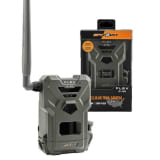
36MP photos, free data plan, and the best app in the category, the easiest way to get cellular scouting.
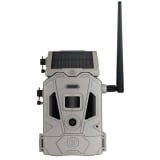
Bushnell's cellular entry, 20MP, AT&T/Verizon, and the image quality you expect from the optics brand.
Keep exploring
Compare across Stealth-cam and cellular trail cameras.
Not sure Stealth Cam Revolver Pro 2.0 is the one?
Run the 4-question camera finder.
Picks a camera based on connectivity, use case, power source, flash type, and budget.
Start the finder →